
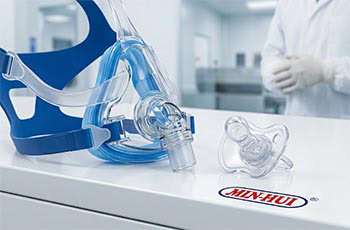
Liquid Silicone Rubber (LSR) has become one of the most critical materials in modern manufacturing due to its safety, durability, and exceptional physical properties. As industries demand cleaner, safer, and more precise production methods, LSR injection molding has emerged as the preferred process for manufacturing high-tier medical, baby care, automotive, electronics, and consumer products.
Understanding the composition of liquid silicone rubber and its diverse applications helps manufacturers select the right material grades and injection molding equipment for their specific production needs.
What Is Liquid Silicone Rubber?
Liquid Silicone Rubber is a two-component, platinum-cured silicone elastomer. Before curing, it exists as a low-viscosity liquid that can be accurately metered and injected into a closed mold. Upon heating, it undergoes a chemical reaction to form a flexible, durable, and highly stable rubber component.
Compared with traditional solid silicone (HCR) compression methods, LSR injection molding offers distinct manufacturing advantages:
- High Production Efficiency: Shorter cycle times with flashless, waste-free molding.
- Excellent Dimensional Accuracy: Perfect for intricate, flash-free micro-molding.
- Fully Automated Manufacturing: Minimal human intervention reduces contamination risks.
- Cleanroom Compatibility: Ideal for medical and healthcare products that require dust-free environments.
What Is Liquid Silicone Rubber Made Of?
LSR is primarily formulated from silicone polymers (based on alternating silicon and oxygen atoms), crosslinkers, reinforcing fillers (such as fumed silica), and specialized additives.
The material is supplied in two parts: Component A (containing the platinum catalyst) and Component B (containing the crosslinker). Once thoroughly mixed and heated inside the mold, it cures into a high-performance material with the following key characteristics:
- Biocompatibility: Non-toxic, odorless, and completely skin-safe.
- Extreme Temperature Resistance: Maintains flexibility and mechanical properties from $-50^circtext{C}$ to over $200^circtext{C}$.
- Chemical & Weather Resistance: Outstanding stability against oxidation, ozone, UV light, and harsh environmental exposure.
- Superior Electrical Insulation: High dielectric strength for critical electronic components.
- Low Compression Set: Retains its shape and sealing elasticity over long-term repeated use.
Common Applications of Liquid Silicone Rubber Products

Thanks to its versatility and high safety standards, LSR is heavily utilized across a wide spectrum of demanding industries.
1. Baby Care Products
LSR is the gold standard for products requiring food-grade or skin-safe certifications. Common products include:
- Baby bottle nipples and pacifiers
- Teethers and soothing toys
- Soft feeding spoons and tableware accessories
- Why it wins: Its extreme softness mimics natural textures, and it can withstand repeated high-temperature sterilization.
2. Medical and Healthcare Devices
Medical-grade silicone is strictly regulated and highly pure. It is commonly used for:
- Respiratory masks and anesthesia valves
- Catheter components and fluid-handling seals
- Wearable medical device straps and sensors
- Why it wins: It is fully biocompatible, hypoallergenic, and compliant with ISO 10993 and FDA standards.
3. Automotive & Aerospace Components
In harsh automotive environments, LSR ensures long-term sealing and insulation. Applications include:
- Weatherproof sealing rings and gaskets
- Wire harness connectors and spark plug boots
- Sensor protection covers and single-wire seals
- Why it wins: It resists automotive fluids, engine heat, and constant mechanical vibration without degrading.
4. Electronics & Optical Engineering
Electronic manufacturers leverage LSR for miniature, waterproof, and durable components:
- Waterproof seals for smartphones and smartwatches (IP67/IP68 rating)
- Keypads, cable connectors, and insulating liners
- LED optical lenses and light guides
- Why it wins: High transparency for optics, combined with excellent dampening and sealing capabilities.
Why LSR Injection Molding Is the Preferred Process
As global manufacturing moves toward automation and smart factories, LSR injection molding offers significant cost and quality advantages over traditional compression molding. Modern LSR injection molding systems provide precise material metering, automatic cold-runner mixing, and high repeatability, making them ideal for high-volume, zero-defect production.
Key Factors to Consider When Choosing an LSR Machine:
When investing in LSR equipment, production managers should evaluate these critical technical metrics:
- Injection & Metering Accuracy: Precise 1:1 mixing of Component A and B to prevent uncured material.
- Barrel Temperature Control: Critical for preventing premature curing before the material reaches the mold cavity.
- Clamping Force & Platen Parallelism: Ensures flash-free molding, reducing post-processing labor.
- Automation Compatibility: Integration with robots for part extraction in cleanroom setups.
How MINHUI Supports Liquid Silicone Rubber Manufacturing
MINHUI specializes in manufacturing advanced, high-precision liquid silicone rubber injection molding machines tailored for demanding production environments.
Our turnkey LSR solutions are designed to support:
- Medical and food-grade cleanroom production
- Multi-cavity, high-volume automotive and electronics parts
- Micro-injection molding for high-precision miniature components
- Custom automation and robot integration
Featuring stable injection performance, precise closed-loop temperature control, and energy-saving servo systems, MINHUI helps manufacturers maximize throughput while achieving consistent, zero-defect quality.
Looking to upgrade your LSR production?
Contact the MINHUI engineering team today for expert machine configurations, mold adaptability analysis, or a detailed project quotation.

