
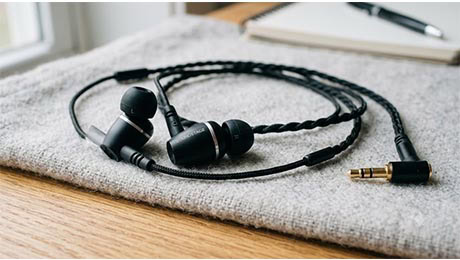
For earphone injection molding machines, the cycle is short. If conditions aren’t mastered, scrap is common. To improve quality and output, manufacturers like MINHUI must master earphone molding adjustments. This is the key to precise process control and avoiding scrap.
Basic Machine Requirements for High-Pressure Molding
The fundamental requirements for injection molding can be summarized in three core elements: plastic, injection, and molding.
First, plasticity is the essential prerequisite for ensuring the quality of the molded product. Second, to meet the molding requirements, a certain amount of pressure and speed must be applied during the process. During injection, immense pressure is generated, often causing the pressure inside the mold cavity to reach extremely high levels of 20 to 45 MPa.
This high-pressure environment, in turn, places strict demands on the equipment: the earphone injection molding machine must have sufficient clamping force to resist the expansion force. Therefore, a stable and reliable molding unit (clamping unit) is an indispensable component of the injection machine.
A Common Pitfall in Process Adjustment: Confusing Mold Issues with Process Issues
When we evaluate a plastic product, we primarily look at three indicators:
- Appearance Quality: This includes product integrity, color uniformity, and surface gloss.
- Dimensional Accuracy: The precision of relative dimensions and positioning.
- Performance: This covers related physical, chemical, and electrical properties.
In actual production, product defects often stem from the mold’s design, manufacturing precision, and subsequent level of wear.
Currently, technicians in many plastic factories face a very difficult problem: they attempt to use process adjustments to compensate for product issues caused by mold defects (such as poor design or wear). Unfortunately, this approach of treating the symptoms rather than the cause is often ineffective and fails to resolve the root problem.
The Golden Rule for Earphone Molding Adjustments: Change One Variable
To truly improve the quality and output of earphone injection-molded parts, we must return to scientific process adjustment.
Given the short injection cycles and low fault tolerance, the correct adjustment method is crucial. The golden rule here is: when adjusting the process, it is best to change only one parameter at a time.
After changing a single variable, you must carefully and repeatedly observe its effect on the product. If you change multiple parameters at once, it becomes difficult to determine which change caused the confusion when a new problem arises, leading to unnecessary misunderstandings and making the issue more complex.
Only through this rigorous, systematic method can you accurately identify the root cause, truly master the production patterns of the injection molding machine, and effectively control the scrap rate to improve overall efficiency.

