
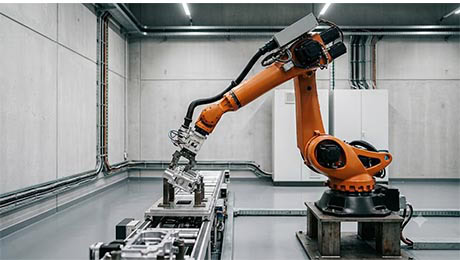
Configuring the right vertical injection molding peripherals is crucial for automated production. Having a high-performance machine alone is not enough. To maximize savings and efficiency, manufacturers like MINHUI recommend coordinating auxiliary equipment—such as auto loaders, dryers, and robotic arms—perfectly with the main machine.
Auto Loaders Are the Vital Throat of the Automatic Feeding System
Raw material transport needs vary from factory to factory. Common types of feeding equipment include suction loaders, pressure loaders, and screw loaders.
The suction loader is currently the mainstream choice for vertical injection molding peripherals. It uses a negative pressure pneumatic feeding principle, consisting of a decompression blower and a cyclone separator. The system uses wind power to suck plastic pellets into the conveying pipe. The air is discharged from the top, while the material falls into the hopper. This method is clean and highly efficient.
In addition, there are pressure loaders that use positive pressure to push material forward, and screw loaders that convey material via a rotating screw shaft.
Using Dryers to Remove Raw Material Moisture Ensures Product Strength
Plastic raw materials often contain moisture. Direct injection without drying can lead to bubbles or insufficient strength. The function of the dryer is to evaporate this moisture through heating, ensuring that the material reaches the required dryness.
Depending on the working pressure, you can choose atmospheric dryers for conventional materials. For engineering plastics that require extremely high dryness, vacuum dryers are a better choice.
Mold Temperature Controllers Precisely Regulate Thermal Balance
The Mold Temperature Controller (MTC) is the key device for regulating the thermal balance of the mold. In the injection molding industry, mold temperature directly determines the appearance quality, dimensional stability, and molding cycle.
Modern high-quality mold temperature controllers can usually lock the control accuracy of oil or water temperature to around ±0.1 degrees. This precision ensures consistent conditions for every injection, optimizing the process and increasing the yield rate.
Robotic Arms Are Efficient Assistants for Replacing Manual Labor
For the insert molding processes often involved with MINHUI vertical injection molding machines, the robotic arm is the best assistant. It can accurately place inserts and remove finished products. Using robotic arms reduces manual errors and saves valuable cycle time.
The 3-in-1 Compact Unit Is a Space Saving Integrated Choice
If your workshop space is limited, you can choose a 3-in-1 compact unit. These devices typically integrate functions like the dryer and mold temperature controller into one machine. It saves floor space and allows for unified control, making it a cost-effective configuration for modern workshops.

