
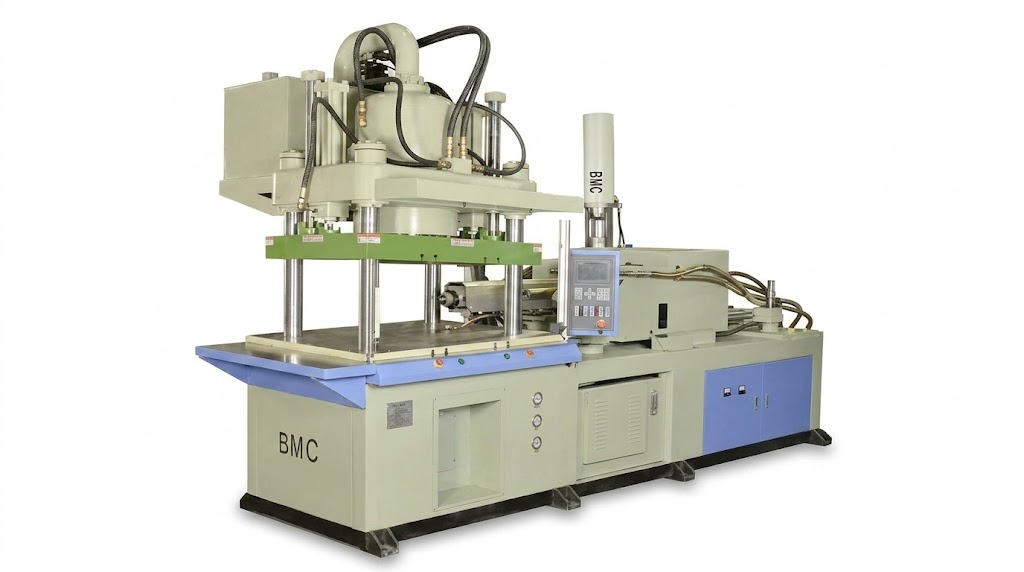
BMC can be evaluated for a switch housing when the selected compound and part design meet the application requirements. It is not automatically the best material for every housing, and a BMC label does not certify the finished electrical assembly.
Define the Housing Requirements
- Drawing revision, interfaces, inserts, dimensions and assembly conditions.
- Required electrical, thermal, mechanical and flame-related performance, with the applicable test methods and conditions.
- Exact compound grade, filler or reinforcement, supplier data and permitted handling.
- Cavities, output target, finishing and inspection requirements.
Compare grade-specific evidence. Do not infer impact resistance, insulation or flame performance solely from the presence of glass fiber or from the molding machine.
Match the Equipment Package
Confirm how the specified feed form is delivered and prepared. Review feeder, screw or plunger arrangement, injection capability, residence and thermal control for the actual compound. Neither arrangement is universally preferred for every BMC formulation.
Review the Tool and Clamp
Check mold fit, projected-area and pressure basis, support, venting, cure control and part removal. Request the selected model’s capability and the tooling review; “extreme locking force” is not a substitute for this assessment.
Use the grade’s dimensional data and representative measurements for cavity compensation. Do not assume that every BMC grade has less shrinkage than every thermoplastic.
Agree the Acceptance Trial
Record material lot, tool, equipment configuration, auxiliaries, finishing or conditioning and inspection methods. Verify dimensions and the required functional results on representative parts and, where specified, the assembly. Keep any compliance claim within the tested scope.
Switch-Housing Questions
Does a Machine Make the Housing Electrically Qualified?
No. Validate the selected material, molded component and applicable assembly requirements.
Does a Rotary Table Guarantee Higher Output?
No. Evaluate the complete loading, cure, unloading and finishing sequence and accepted output.
See the equipment design review and delivery and acceptance checklist.
Related Illustration

The illustration does not establish a model-specific setting, diagnosis or service procedure.

